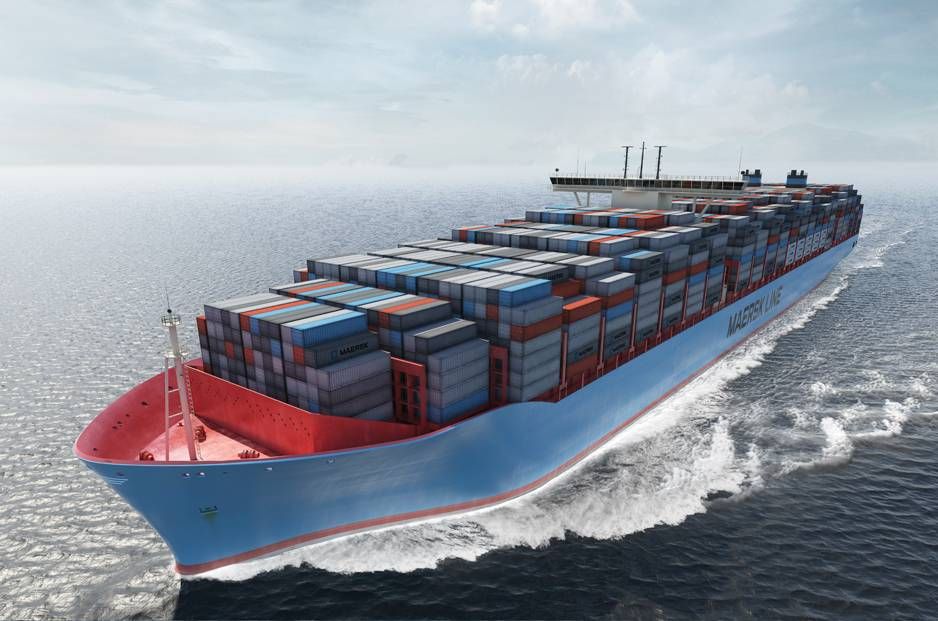
Container ships carry most of the world’s manufactured goods and products, usually on scheduled liner services.
Container ships transport a combination of two standardized container sizes known as 20- or 40-feet equivalent units, abbreviated to TEUs and FEUs. The containers are carried in cellular holds and stacked on the ships hatch covers and upper deck. The contents of the containers can be non-perishable, or perishable, with the latter often being carried in refrigerated containers.
Container shipping generally operates according to regular schedules on set routes, known as ‘liner’ services. For this reason, the sector is sometimes referred to as ‘liner shipping’.
The handling system for the containers is completely mechanized, making containerisation a highly efficient and fast mode of transport. Dedicated container ships depend on the ports container cranes to load and unload the containers.
Container ships have played a key role in the globalisation of products over the past twenty years, enabling consumer goods and products to be manufactured in developing, lower cost countries for export to higher cost countries.
Container ships have grown significantly in size in over the last 20 years, in 2002 a large container ship would be able to carry approximately 6,500 TEU, today the largest containerships can now transport nearly 24,000 TEU.