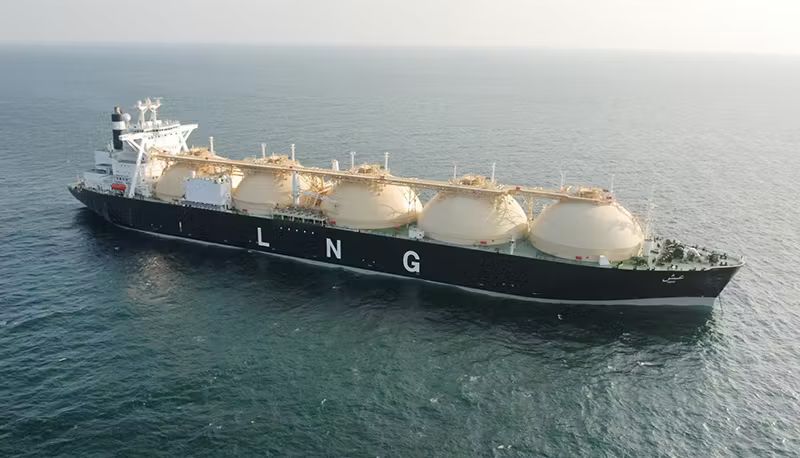
An LNG vessel (also known as an Liquified Natural Gas tanker, carrier, or ship) is specially designed to transport LNG in large quantities. Typically, they are around 300 metres long, 43 metres wide, and have a draft of about 12 metres.
LNG vessels stand out from other bulk cargo carriers due to their unique features (e.g. heavy insulation and temperature-controlled tanks) which allow them to keep the gas in a liquid state. They usually have a turbine-powered propulsion system that uses boil-off-gas (BOG) from LNG, boiled liquid fuels like oil, or a combination of both. By using natural gas as their fuel for propulsion, LNG carriers produce fewer greenhouse gas emissions than traditional ships.
There are about 360 LNG carriers around the world. Also known as LNG ships, this type of vessel is specifically designed to handle the unique properties of liquefied natural gas (LNG) during its transportation. Given the nature of LNG, it cannot be shipped on regular vessels. Instead, it needs to go on an advanced LNG ship which can ensure that during its transit, the LNG is kept at either:
-
Pressures much greater than atmospheric pressures, or
-
Very low temperatures (around -162°C), or
-
A combination of both.